La ciudad del agua y la industria
Providence es una ciudad de ríos. El Woonasquatucket y el Moshassuck se unen en el centro para formar el río Providence, que desemboca en la bahía de Narragansett. Esa agua explica la fundación de la ciudad, su comercio, sus fábricas y su renacimiento moderno en torno a Waterplace Park.
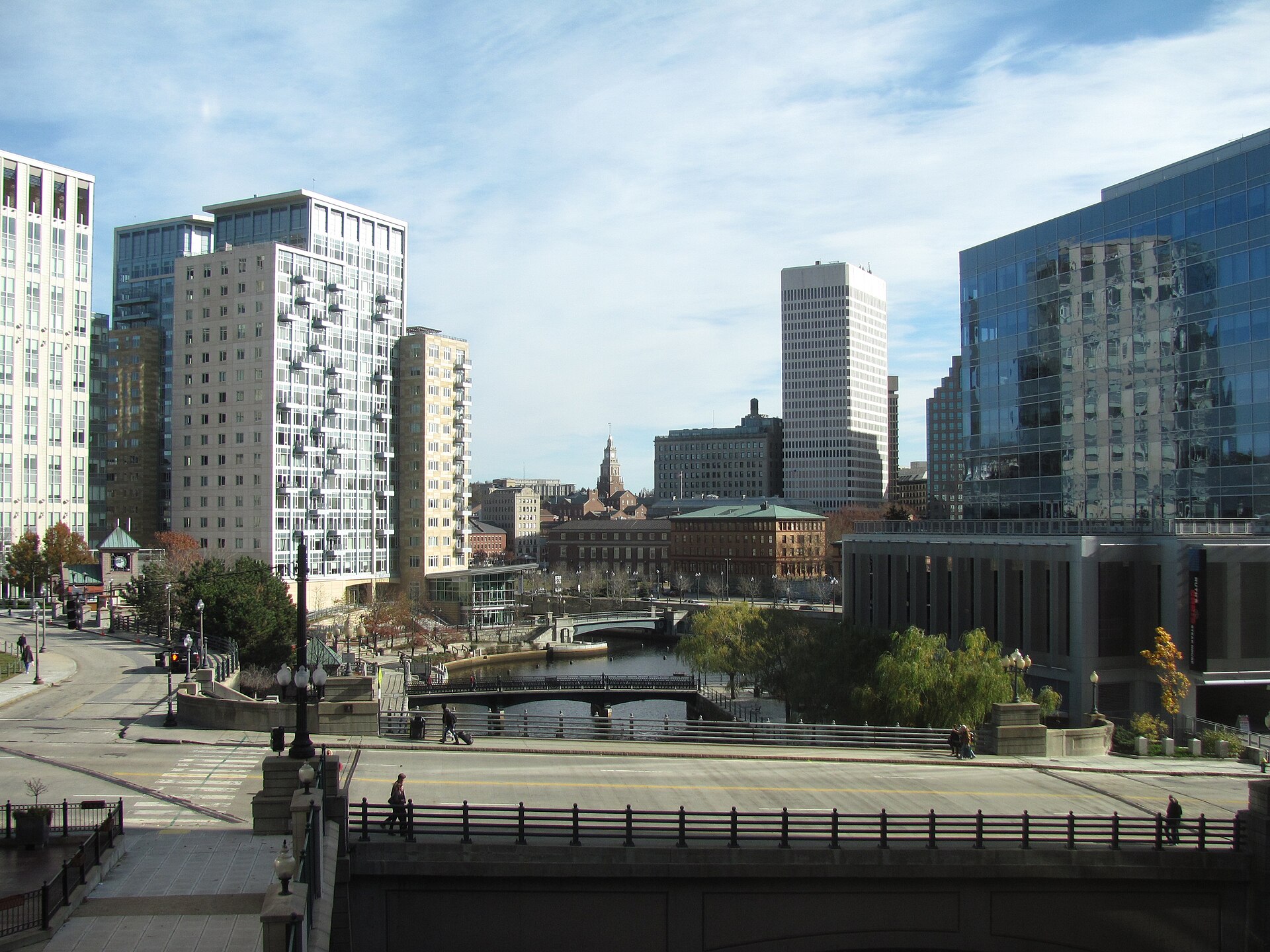
Los ríos como cuerpo de la ciudad
Dos ríos, el Woonasquatucket y el Moshassuck, confluyen en el centro de Providence y forman el río Providence, que desemboca en la cabecera de la bahía de Narragansett. El agua no es un adorno: explica dónde nació la ciudad y cómo creció gracias al comercio y a la industria.
Durante casi todo el siglo XX los ríos estuvieron enterrados bajo el pavimento y los estacionamientos. Volver a descubrirlos fue la maniobra central de la recuperación de la ciudad a fines de siglo.
Waterplace Park y la ribera
Waterplace Park, inaugurado en 1994 en el emplazamiento de la antigua Great Salt Cove, devolvió los ríos al corazón del centro, con una cuenca y un paseo fluvial de puentes y senderos de piedra. Es el mejor lugar para percibir cómo Providence recuperó su relación con el agua.
También es el escenario de WaterFire, la instalación artística de fuego y música que se monta sobre los ríos en noches seleccionadas — un ritual moderno construido directamente sobre el rasgo más antiguo de la ciudad.
The Arcade y la ciudad comercial
Providence ya era una ciudad comercial ambiciosa mucho antes de tener sus parques. The Arcade, construido en 1828, es la galería comercial cubierta más antigua de Estados Unidos. Este edificio de estilo neogriego muestra una ciudad con suficiente confianza como para dar a su mercado la fachada de un templo.
Queda a pocos minutos a pie de los ríos, y leer ambos en conjunto —agua y comercio— es la forma más rápida de entender el centro.
Del puerto a la fábrica
Los mismos ríos impulsaron la industria. Unas millas al norte, en Pawtucket, el molino hidráulico de Samuel Slater de 1793 dio comienzo a la Revolución Industrial estadounidense. Después, los sectores textil, de maquinaria y de joyería llenaron Providence de fábricas, almacenes y barrios obreros de inmigrantes.
Aquellas comunidades, irlandesas, italianas, portuguesas y muchas otras, dieron a la ciudad moderna buena parte de su carácter, desde sus barrios católicos hasta su cocina. El paso del muelle a la fábrica es uno de los grandes hilos de la historia de Providence.
Rastro de fuentes revisadas
- Greater Providence CVB — Waterplace Park y Riverwalk — verificado 2026-06-19
- Rhode Island Department of Environmental Management — Narragansett Bay — verificado 2026-06-19
- Blackstone River Valley National Historical Park (NPS) — verificado 2026-06-19